90 minutes together
How to Navigate
the Dark Triad
in Ambitious Environments
aka “How to Work with Assholes”
01 Introduction
Set the stage
Name the patterns and the situations we face.
02 Crowdsourcing
Trade what works
Share a story, a strategy and what happened. The heart of our session.
03 Self-reflection
Look inward
Where might I cause harm? What will I take responsibility for?
Discuss behavior. Keep stories anonymous. Make room for each other.
Our shared toolkit
Three ways to
find your footing
Internal
Protect your sanity
Understand the patterns. Find a mental frame that keeps you grounded.
What helps you
keep perspective?
External
Work effectively.
Don’t lose the game.
Deal with difficult people. Protect your work and your ability to act.
What changes
the interaction?
Strategic
Stay, manage,
or leave
Weigh the mission and benefits against the harm. Keep alternatives open.
When is staying
no longer worth it?
Tools we can try
A toolkit for the
messy middle
Open a tool for a concrete way to try it.
Internal
Radical acceptancePlan around observed patterns.
Ask: “If this pattern continues, what choice can I make?” Acceptance can help you act without waiting for someone else to change.
Don’t personalizeTheir behavior does not define you.
Write down what happened, separate it from what it seems to say about your worth, and check your reading with someone you trust.
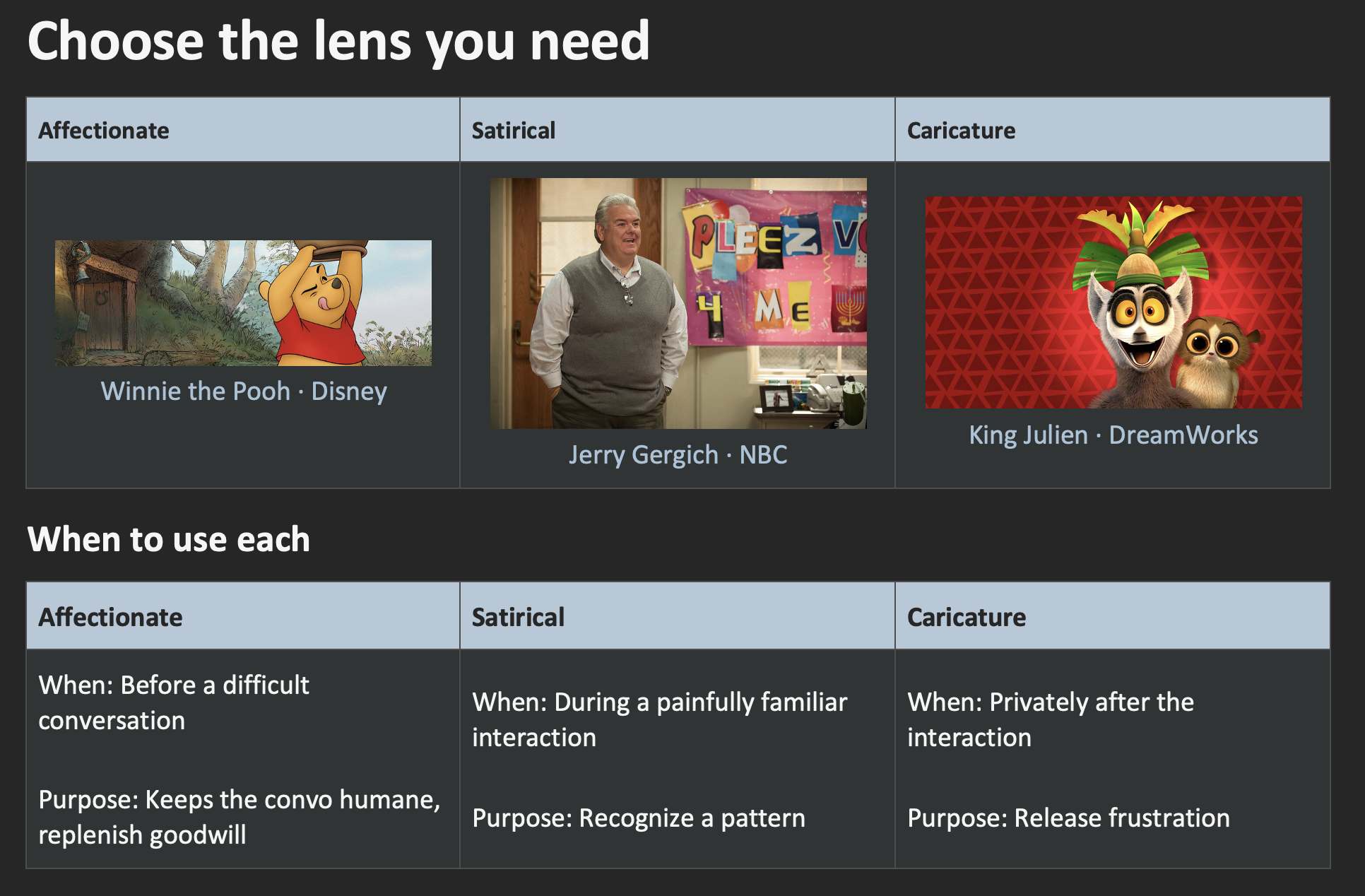
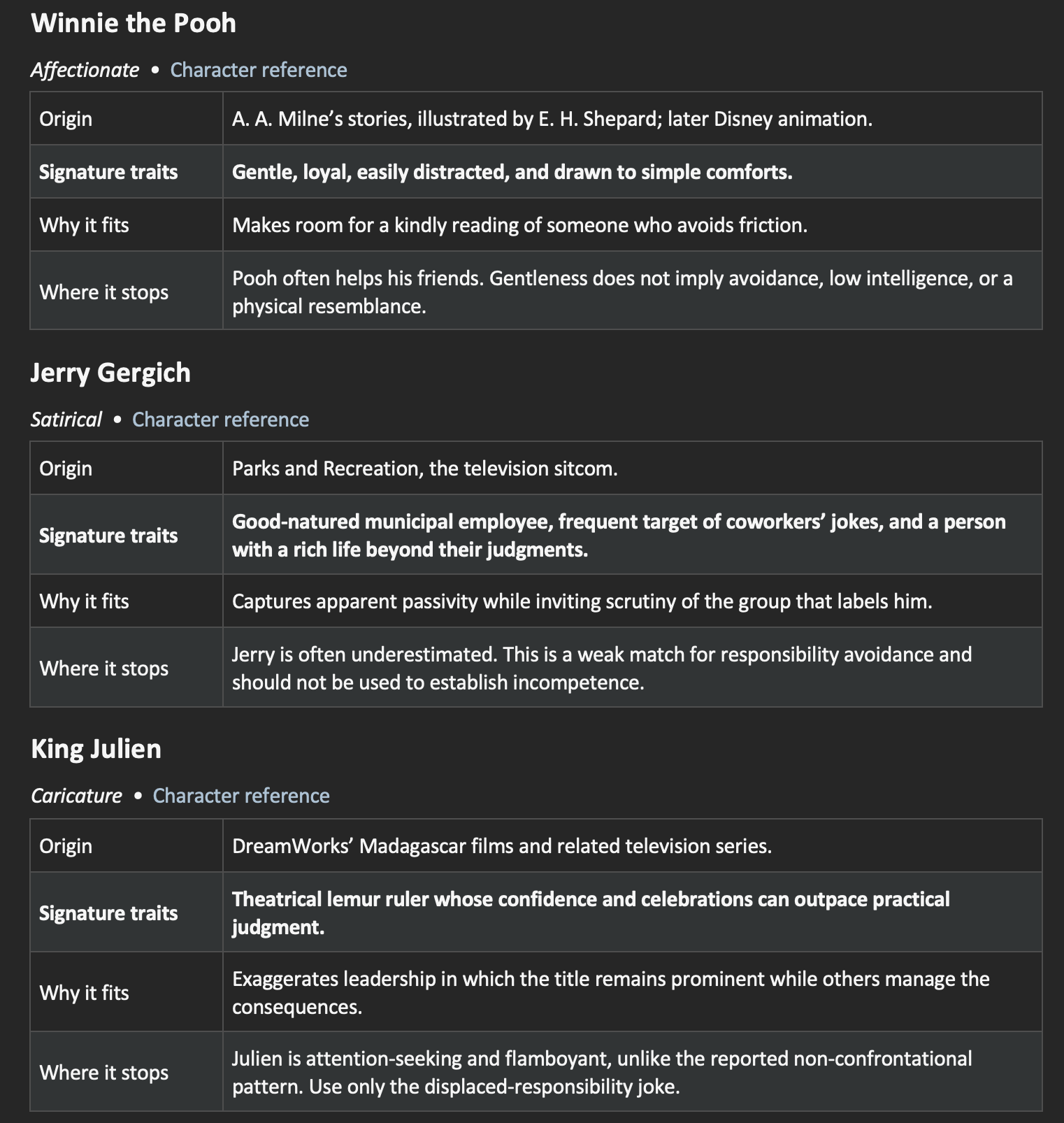
Caricature / archetypeUse private humor for perspective.
Borrow a familiar film or cartoon archetype to make the pattern feel predictable. Keep the metaphor private and focus your response on the actual behavior.
External
Written commitmentsRecord who will do what, when.
Follow up with a short recap: “We agreed that X owns Y by Friday. Please flag any corrections.” Keep a record you can refer to.
Verification + boundariesCheck facts. Set firm limits.
Confirm important claims independently. State a boundary you can carry out: “I’ll continue this conversation when we can speak without insults.”
Less dependenceBuild options. Limit manipulation.
Build direct relationships, keep shared records and create alternative routes for decisions. Reduce the number of things one person can hold over you.
Strategic
Benefits vs. harmWeigh mission gains against health and values.
Write two honest lists: what staying gives you, and what it costs. Include the effect on people around you and the realistic alternatives.
Stay or manageSet conditions and a review date.
Define what would make staying workable. Put a date on reviewing the evidence so that “for now” does not quietly become indefinite.
Exit triggersDecide your limits and next steps.
Name the conditions that would prompt you to leave or seek help, such as repeated boundary violations or unacceptable harm. Prepare your next step before you need it.
Accountability across all three
Where do I cause harm? Seek candid feedback. Repair harm and track change.
Radical acceptance informed by Dr. Ramani Durvasula. Further viewing. Archetypes: the host’s tool.